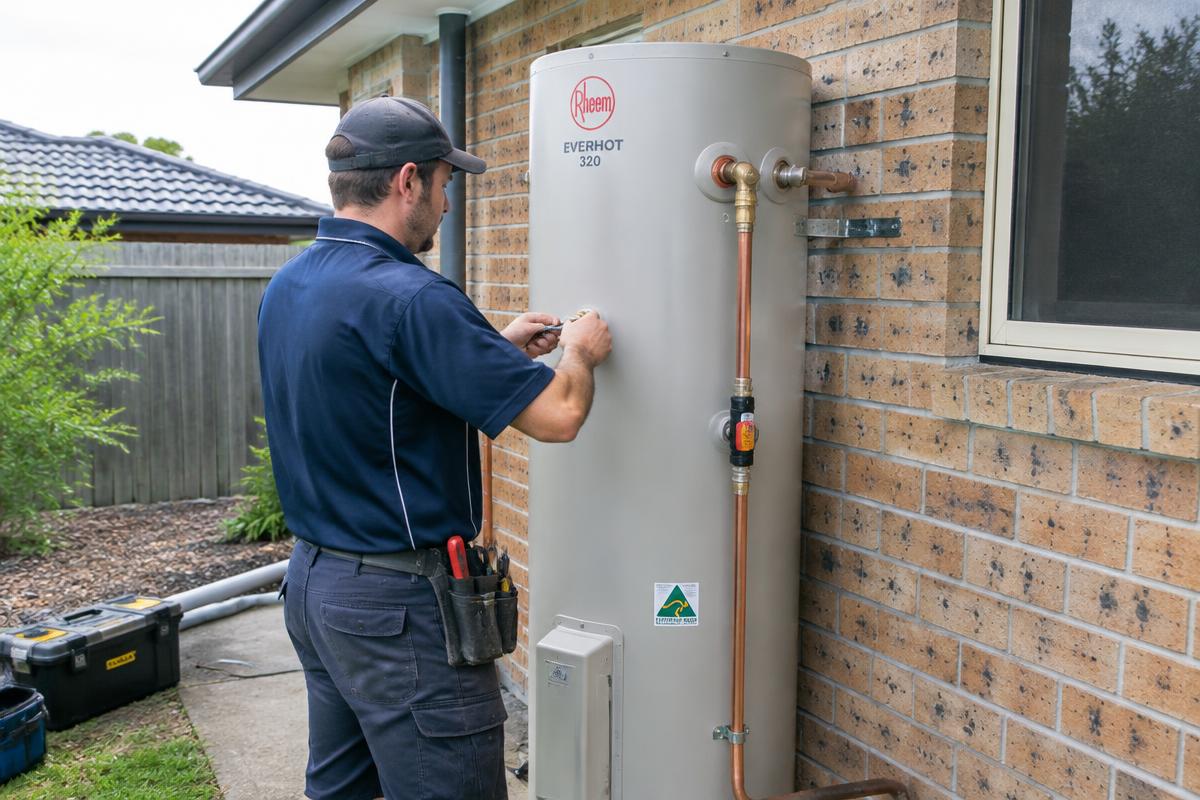
Losing hot water is disruptive, but it doesn't always mean you need a new system. A faulty element, thermostat, valve or pilot can often be repaired.
A4plumbing inspects your hot water system, explains what's failed and gives you a straight answer about whether repair makes sense or replacement is the better long-term option. Gas appliance work is carried out under the appropriate licensing requirements.
Common problems we help with
- No hot water at all
- Water not getting hot enough or running out quickly
- Leaking from the tank or fittings
- Relief valve constantly dripping or discharging
- Discoloured or smelly hot water
- Pilot light that won't stay lit (gas systems)
Signs you should call a plumber
How the job works
- 1
Check the basics
Power, gas supply, switches and safety devices are checked first.
- 2
Test components
Elements, thermostats, valves and the anode are inspected where applicable.
- 3
Repair or advise
We repair what's practical, or explain why replacement may be better value.
What affects the cost?
Every job is different, so we don't publish fixed prices. We'll explain the costs before work begins. Factors include:
- System type (electric, gas, heat pump, solar)
- Age and condition of the tank
- Availability of parts for the brand
- Access to the unit
Prevention and maintenance tips
- Have the relief valve eased (operated) every six months as the manufacturer recommends
- Ask about anode inspection to extend tank life
- Keep the area around the system clear
Questions customers ask
Is a dripping relief valve normal?
A small amount of water during heating can be normal. Constant dripping or heavy discharge usually means the valve or pressure needs checking.
Repair or replace?
If the tank itself is leaking, replacement is usually required. Component faults on a younger system are often worth repairing.